Child Vision Assessments
- Home
- Child Vision Assessments
Our Services
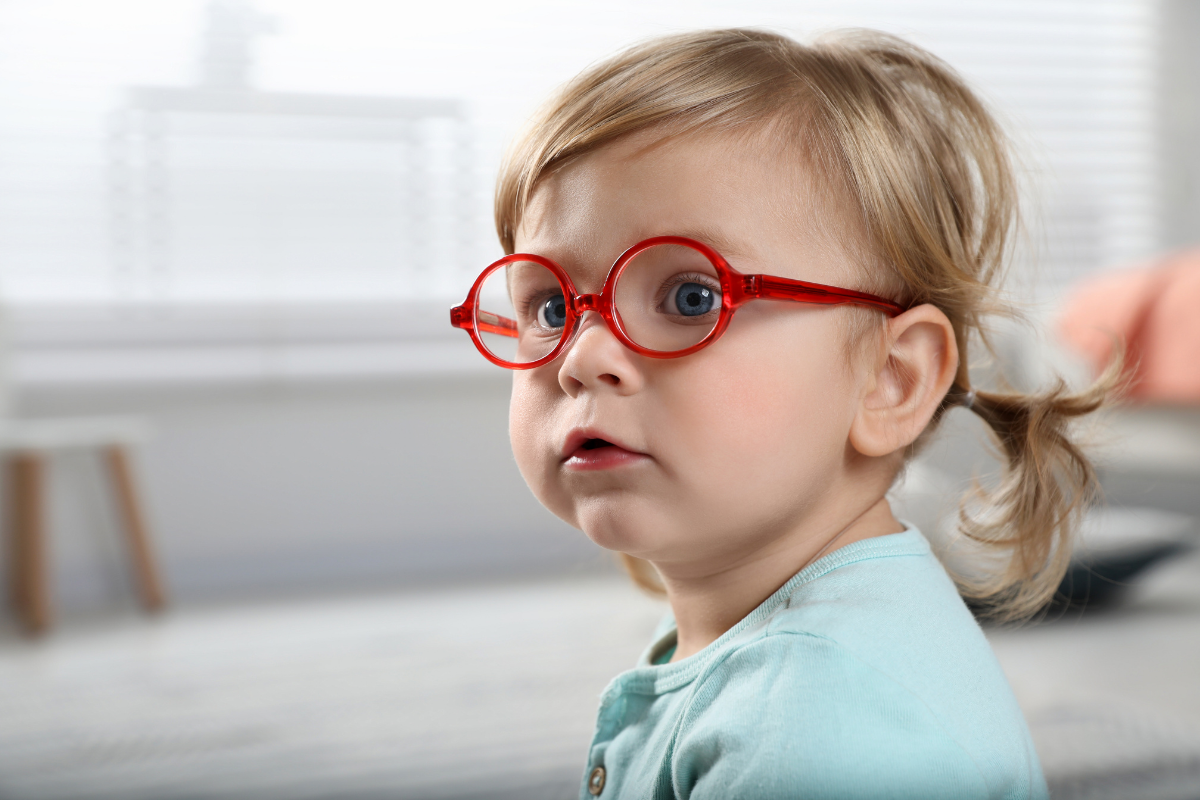
Helping your child see clearly, comfortably and confidently
Children don’t always realise that their vision could be affecting them. If they have always seen the world a certain way, they may not know that something is blurry, uncomfortable or more difficult than it should be. Our children’s eye exams look at more than simply how clearly your child can see. They also assess focusing, eye coordination and eye health.
A comprehensive child vision assessment can identify problems that may otherwise go unnoticed, including differences between the eyes and conditions such as amblyopia (lazy eye). Regular eye examinations during childhood can help identify concerns early, while the visual system is still developing.
Signs your child may be having difficulty with their vision
Vision problems can sometimes show up in the way a child reads, writes, concentrates, plays or approaches everyday activities.
Your child may:
-
Lose their place or skip lines when reading
-
Frequently use a finger to keep their place
-
Complain that words are blurry, moving or difficult to keep focused on
-
Hold books, screens or reading material very close
-
Avoid reading or become tired quickly when reading
-
Have difficulty copying from the whiteboard
-
Read more slowly than expected for their age
-
Have difficulty with handwriting or spacing
-
Rub their eyes frequently
-
Experience headaches or eye strain
-
Have difficulty concentrating during close work
-
Avoid activities requiring sustained visual attention
-
Struggle with ball sports or hand-eye coordination
-
Tilt or turn their head when looking at something
-
Cover or close one eye when reading or concentrating
-
Have an eye that appears to turn in or out
Having one or more of these signs does not necessarily mean your child has a vision problem. However, they are good reasons to have their vision assessed.
Visual skills for everyday tasks
A significant amount of childhood learning relies on vision. Reading, writing, copying from the whiteboard and using digital devices all require the eyes to see clearly and work comfortably for extended periods. Good vision involves much more than simply seeing clearly on an eye chart.
Children need to be able to focus comfortably during close work, shift their focus between different distances and keep both eyes working well together. They also rely on accurate eye movements to move from word to word and line to line, scan across a page, judge distances and coordinate what they see with their hands and body.
When these visual skills are not working efficiently, reading and other close-up tasks can become tiring, uncomfortable or frustrating. A comprehensive eye examination can help determine whether a visual problem may be contributing.
When one eye is weaker than the other
It is possible for one eye to see more clearly than the other without a child realising there is a problem. If one eye consistently provides a less clear image during the early years of visual development, the brain may begin to rely more heavily on the clearer eye. This can interfere with normal visual development and may result in amblyopia, commonly called a lazy eye.
Children often do not notice that one eye is weaker because their other eye is providing a clear image. This is one reason an eye examination is important even when your child appears to see well.
Early identification gives us the best opportunity to manage problems while the visual system is still developing.
What is included in a child vision assessment?
A comprehensive child vision assessment goes beyond checking whether your child can read an eye chart. We look at how their eyes are developing and how effectively their visual system is working.
Depending on your child's age, symptoms and individual needs, we may assess:
-
Visual acuity — how clearly each eye can see
-
Eye health — checking the health of the eyes and surrounding structures
-
Eye alignment — how well the eyes work together
-
Focusing ability — how accurately the eyes focus, particularly for close work
-
Eye movements — how efficiently the eyes move when reading and looking between targets
-
Binocular vision — how effectively the two eyes work together
-
Depth perception — the ability to judge distance and three-dimensional space
-
Refraction — whether glasses or another optical correction may be needed
-
Visual development — looking for signs of conditions such as amblyopia or strabismus
We tailor each assessment to your child's age and individual needs. Your child does not need to be able to read a conventional eye chart for us to assess their vision.
Checking for short-sightedness
Short-sightedness, or myopia, is increasingly common in children. An eye examination can identify whether your child is short-sighted and monitor changes in their prescription and eye growth over time.
If your child's myopia is progressing, we can discuss myopia management options designed to slow its progression and support their long-term eye health.
Learning difficulties & vision
Learning difficulties such as dyslexia and attention difficulties are complex and can have many contributing factors. They are not simply caused by an eye or vision problem. However, some children with learning difficulties may also have a separate visual problem that can make reading or other visually demanding tasks more difficult or tiring.
A comprehensive eye examination can identify whether a visual problem is present, and we can recommend management or referral to other professionals if needed. At Wanganui Eyecare, we also offer assessment for Meares-Irlen visual stress and individually selected tinted lenses.
Helping your child's eyes stay comfortable
Simple habits can help make reading, homework and screen use more comfortable.
Encourage good lighting, regular breaks from close work, a comfortable reading and screen distance, and good posture. Regular time outdoors is also beneficial for children's overall wellbeing and is associated with a lower risk of developing myopia.
When should my child have an eye examination?
You don't need to wait until your child complains about their vision. Children may not recognise that something is unusual, particularly when a problem has developed gradually or affects only one eye.
An eye examination is particularly worthwhile if your child is struggling with reading or schoolwork, experiencing headaches or tired eyes, has an eye that turns in or out, has a family history of significant vision problems, or if you simply have concerns about how they see. We can recommend how often your child should be reviewed based on their age, visual development and individual needs.
Vision support for eligible families
Eligible children aged 15 and under may be able to access the Children's Spectacle Subsidy, which provides funding towards eligible vision care, including eye examinations, glasses and other approved items.
Eligibility includes Community Services Card or High Use Health Card requirements, as well as clinical criteria. Additional funding may also be available for some children with more complex vision needs.
Our team can check your child's eligibility and help arrange the subsidy application where appropriate.
Give your child's vision the best start
Have concerns about your child's vision? Book a child vision assessment with our team.
Have questions? We're here to help
Answers to some common questions about children’s vision and eye examinations.
Children do not need to be able to read or recognise letters to have their eyes examined. An assessment can be adapted to suit their age and development. If you have concerns about your child's vision at any age, it is worth having their eyes checked.
No. We use age-appropriate techniques to assess children's vision, so younger children can still have their eyes examined.
This depends on your child's age, visual development, family history and whether any concerns have been identified. We can recommend an appropriate review schedule for your child.
Yes. A comprehensive eye examination can identify differences in vision between the eyes and assess for conditions such as amblyopia and strabismus. Early detection is important while the visual system is still developing.
Some vision problems can make reading and other close-up activities more tiring or difficult. An eye examination can assess eyesight, focusing, eye coordination and other visual skills to determine whether a visual problem may be contributing.
Children can have a vision problem without realising it, especially if it has developed gradually or mainly affects one eye. An eye examination can identify issues that may not be obvious in everyday life.