Optical Coherence Tomography (OCT)
- Home
- Optical Coherence Tomography (OCT)
Our Services
Optical Coherence Tomography (OCT)
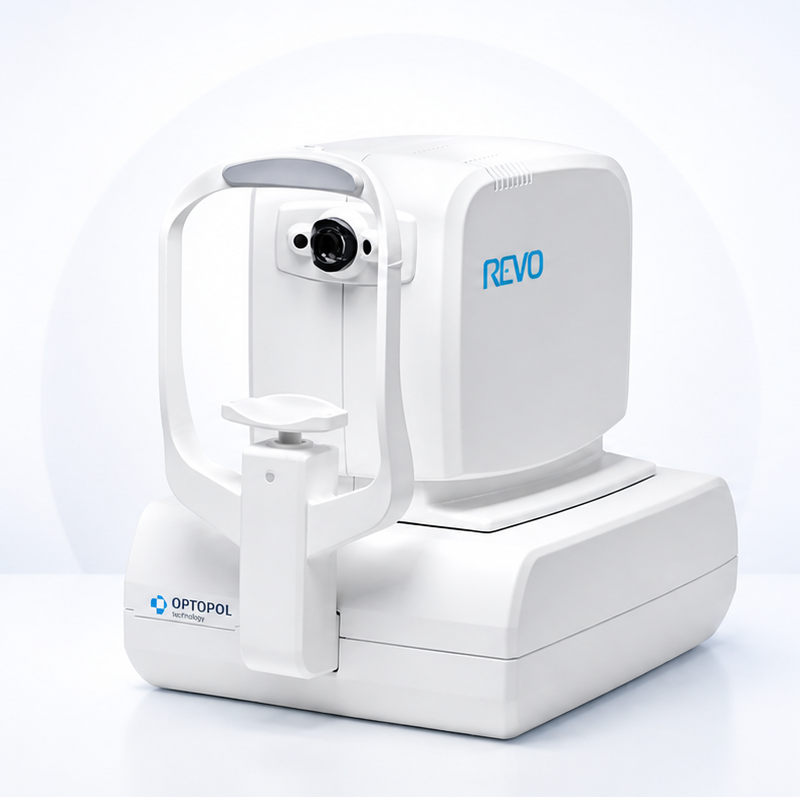
Some eye conditions can develop gradually without causing noticeable changes to your vision. Optical Coherence Tomography (OCT) gives us a detailed view of the tissues within your eyes, helping us identify and monitor changes that may not be visible during a routine eye examination.
At Wanganui Eyecare, we use the Optopol Revo 60 to capture high-resolution images of the eye. OCT is quick, painless and non-invasive, with nothing touching your eye.
Detailed Imaging of the Eye
OCT uses light to create detailed, cross-sectional and three-dimensional images of the structures within your eye. It can provide high-resolution imaging of both the front and back of the eye, including important structures such as the retina, macula and optic nerve.
These detailed images allow us to examine the eye from different perspectives and can be compared with previous scans to help identify subtle changes over time.
Why is OCT important?
OCT provides valuable information when assessing and monitoring a range of eye conditions, including:
-
Glaucoma
-
Macular and retinal conditions
-
Diabetic eye disease
-
Optic nerve changes
-
Other retinal and optic nerve conditions
Early identification of changes can allow appropriate monitoring and, when necessary, timely management.
Monitoring changes over time
One of the key benefits of OCT is the ability to compare your images from different appointments. By monitoring your eyes over time, we can look for changes and identify trends that may not be apparent from a single examination. This is particularly valuable when monitoring conditions such as glaucoma and retinal disease.
What happens during an OCT scan?
During an OCT scan, you simply look into the instrument at a target while it captures detailed images of your eyes. The scan is quick and completely non-invasive — nothing touches your eye.
The process is painless and requires no special preparation. Your optometrist will guide you through the scan and explain the images and findings as part of your examination.
A more complete picture of your eye health
An OCT scan does not replace a comprehensive eye examination. It provides an additional layer of information that can help your optometrist assess your eyes in greater detail and monitor changes over time. At Wanganui Eyecare, we combine advanced diagnostic technology with thorough clinical expertise to provide comprehensive care for your eyes.
See more. Monitor changes. Protect your vision.
Give your optometrist a clearer picture of your eye health with advanced OCT imaging.
Book your comprehensive eye examination with Wanganui Eyecare today.
Have questions? We're here to help
Find answers to common questions about OCT scans, what they involve, what they show, and how they help us monitor your eye health.
There is no single schedule that is right for everyone. Your optometrist will recommend how often OCT imaging is appropriate based on your individual eye health, age, risk factors and previous results.
Yes. OCT can be useful even when your eyes are healthy. An initial scan can provide a valuable baseline, which can then be compared with future scans if needed.
Yes. Your optometrist can show you the images and explain what they show and how they relate to your eye health.
Your optometrist will explain the findings and discuss what they mean for your eye health. Depending on the results, this may involve monitoring, further testing, treatment or referral to an ophthalmologist.
OCT provides detailed images of the macula and can help your optometrist identify and monitor changes associated with macular conditions.
OCT can reveal structural changes that may not yet be causing noticeable changes in your vision. This is one reason it can be a valuable part of assessing and monitoring eye health.