Red Light Therapy for Childhood Myopia
- Home
- Red Light Therapy
Our Services
Slowing the Progression of Childhood Myopia
Childhood myopia (short-sightedness) is becoming increasingly common. Increased screen use, less time outdoors and family history can all contribute to a child's risk of developing short-sightedness. While glasses and contact lenses correct blurred vision, they do not slow the growth of the eye that causes myopia to worsen over time.
As myopia increases and the eye continues to grow longer, the lifetime risk of certain eye conditions, including retinal problems and myopic macular degeneration, can also increase.
At Wanganui Eyecare, we offer Repeated Low-Level Red-Light (RLRL) Therapy as one of our myopia management options. This treatment is used to help slow the progression of childhood myopia by reducing excessive eye growth.
What is Red Light Therapy?
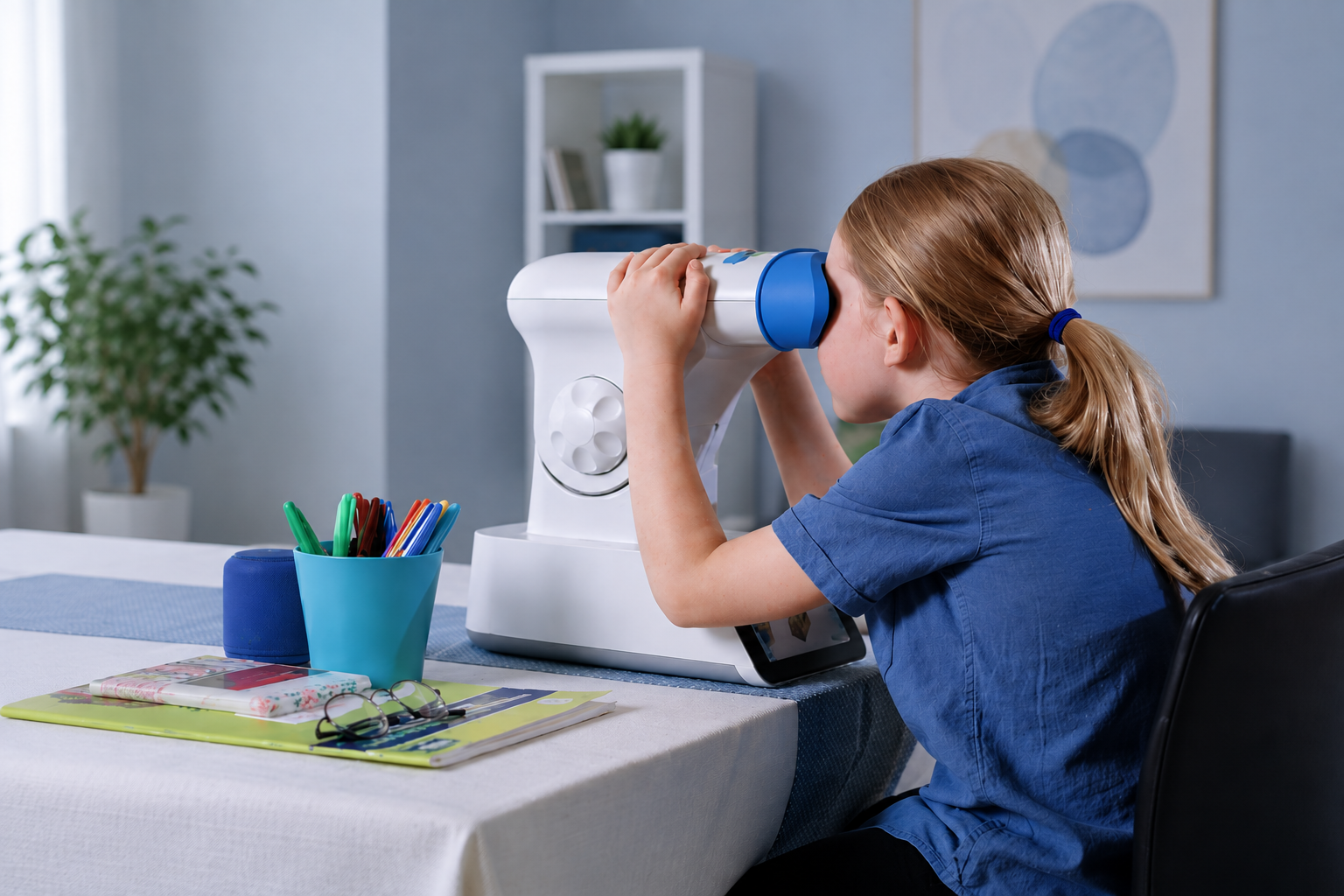
Repeated Low-Level Red Light (RLRL) Therapy is a non-invasive treatment used to help slow the progression of childhood myopia by reducing excessive eye growth. At Wanganui Eyecare, treatment is delivered using the Myproclear® device. During each three-minute session, the child looks into the device while a controlled, low-level red light is directed towards the retina.
The exact way RLRL works is still being studied. Research suggests that the light may influence processes within the eye associated with growth, helping to slow the axial elongation that occurs as myopia progresses.
The treatment is:
-
Non-invasive
-
Does not involve eye drops or medication
-
Contact lens free
-
Performed at home
-
Quick and painless
Most children complete their treatment before or after school as part of their normal daily routine.
Why Does Myopia Progression Matter?
Many parents think that stronger glasses are simply part of growing up. However, increasing myopia means that the eye is continuing to grow longer. It is this increase in eye length—not just the glasses prescription—that is associated with a higher lifetime risk of several eye diseases.
Modern myopia management aims to slow this eye growth while children are still developing. Even slowing progression by a relatively small amount may reduce the risk of eye disease later in life.
How Effective Is Red Light Therapy?
Repeated Low-Level Red-Light Therapy has been evaluated in a number of clinical studies.
Research has shown that it can:
-
Significantly slow myopia progression.
-
Slow axial eye growth.
-
Continue to show benefit with ongoing treatment.
Clinical studies have shown promising results, although like all myopia treatments, results vary from child to child. Regular use is important to achieve the greatest benefit.
What is Axial Length?
When monitoring childhood myopia, we don't just measure your child's glasses prescription. We also measure axial length, which is the distance from the front of the eye to the retina at the back of the eye. As myopia progresses, the eye becomes longer. Measuring axial length helps us determine whether treatment is successfully slowing that growth and provides a more complete picture of your child's eye health.
How is the Treatment Performed?
Treatment is completed at home using the Myproclear device.
Children use the device:
-
3 minutes per session
-
2 sessions each day
-
5 days per week
The device records each treatment session automatically, allowing both parents and your optometrist to monitor how regularly it is being used.
Is Red Light Therapy Safe?
Published studies have generally reported a favourable safety profile for RLRL during the periods studied. However, it is still a relatively new treatment and longer-term safety continues to be researched, so careful patient selection and regular monitoring are important.
Before recommending treatment, we carry out a comprehensive eye examination to determine whether Red Light Therapy is suitable for your child. Regular review appointments allow us to monitor their prescription, axial length and overall eye health throughout treatment.
Is My Child Suitable?
Red Light Therapy may be suitable for children who:
-
Are short-sighted.
-
Have prescriptions that continue to increase each year.
-
Are at risk of developing high myopia.
-
Would prefer a treatment that does not involve eye drops or contact lenses.
Not every child is suited to the same treatment. During your child's assessment, we will discuss the available myopia management options and recommend the approach most appropriate for their individual needs.
What is the first step?
Your child's treatment begins with a comprehensive myopia assessment.
-
A full eye examination
-
Measurement of their prescription
-
Axial length measurement
-
Assessment of eye health
-
Discussion of treatment options
If Red Light Therapy is recommended, we will show you and your child how to use the device and arrange regular follow-up appointments to monitor progress.
Help Slow Your Child's Myopia Progression
Early assessment and ongoing monitoring can make a difference in managing childhood myopia.
Book a myopia assessment with Wanganui Eyecare to discuss whether Red Light Therapy or another myopia control option is right for your child.
Have questions? We're here to help
Explore answers to common questions about Red Light Therapy, myopia control and your child's treatment options.
Yes. Red Light Therapy is designed to slow the progression of myopia. It does not replace glasses or reverse existing short-sightedness.
No. Treatment is painless and takes only three minutes per session.
This depends on your child's age and how quickly their myopia is progressing. We will monitor their progress at each review appointment and discuss ongoing treatment with you.
Like any treatment, consistency is important. Missing occasional sessions is unlikely to affect treatment significantly, but regular use gives the best opportunity to slow myopia progression.
Yes. For some children, Red Light Therapy may be used alongside other evidence-based myopia management treatments where appropriate.
Myopia progression is monitored over time rather than after individual treatments. During regular review appointments, we assess your child's vision, glasses prescription and axial length measurements to determine how their eyes are responding to treatment. Consistent use of Red Light Therapy and ongoing monitoring help us evaluate its effectiveness and make any adjustments to your child's myopia management plan if needed.