Clear vision at every distance
Progressive Lenses
Progressive lenses provide clear vision for distance, intermediate and near in one pair of glasses. With no visible line between the different areas, they offer a seamless way to see clearly throughout the day.
Whether you're driving, using a computer, reading or moving between different tasks, the right progressive lens can provide comfortable, natural vision.
Why might I need progressive lenses?
As we get older, the natural lens inside the eye gradually becomes less flexible. This makes it harder to focus on close-up objects — a normal age-related change called presbyopia. You may notice that reading becomes more difficult, you need to hold things further away, or you find yourself switching between distance and reading glasses. Progressive lenses can bring your different vision needs together in one pair of glasses.
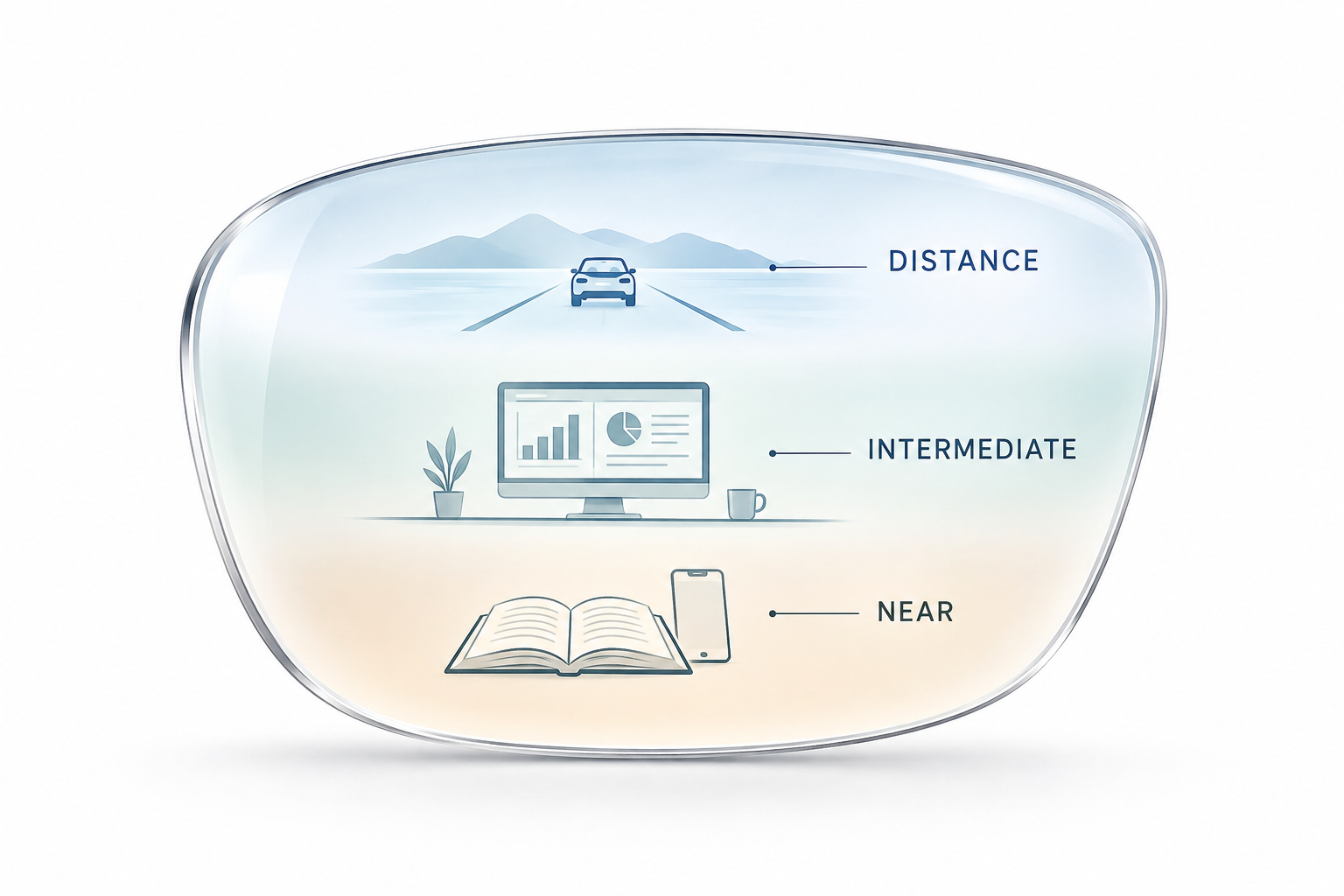
How do progressive lenses work?
-
Distance The upper part of the lens is designed for seeing clearly in the distance — whether you’re driving, watching TV, or enjoying the view around you.
-
Intermediate As your gaze moves towards the middle of the lens, the prescription changes to help with intermediate distances, such as looking at a computer screen, dashboard, or someone across a desk.
-
Near The lower part of the lens is designed for close-up activities such as reading a book, using your phone, or looking at menus.
Standard vs Premium Progressives
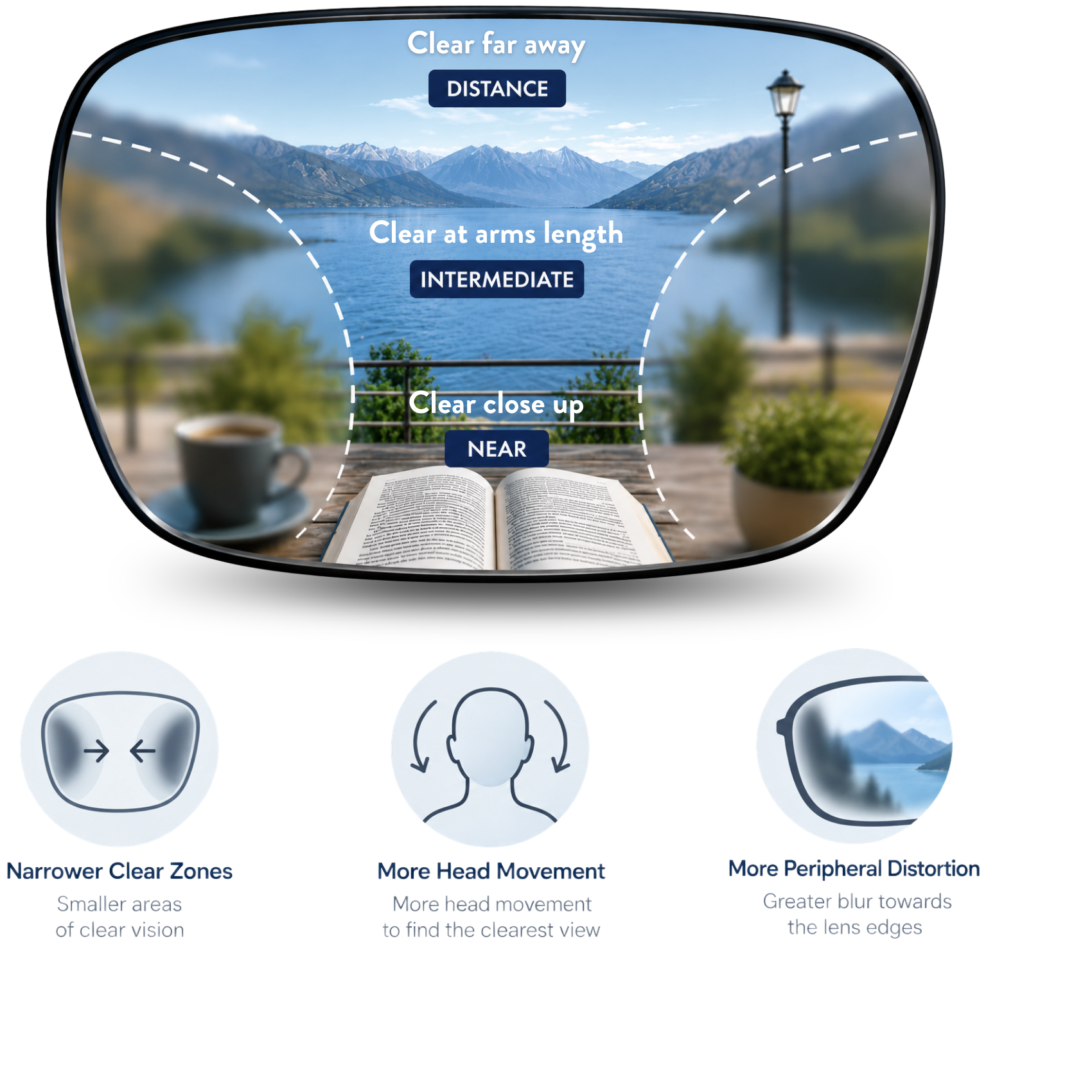
Progressive lenses combine distance, intermediate and near vision into a single pair of glasses. While all progressive lenses provide this convenience, more advanced designs can offer wider clear zones, smoother transitions and reduced peripheral distortion for more comfortable vision.
Standard Progressive
Premium Progressive
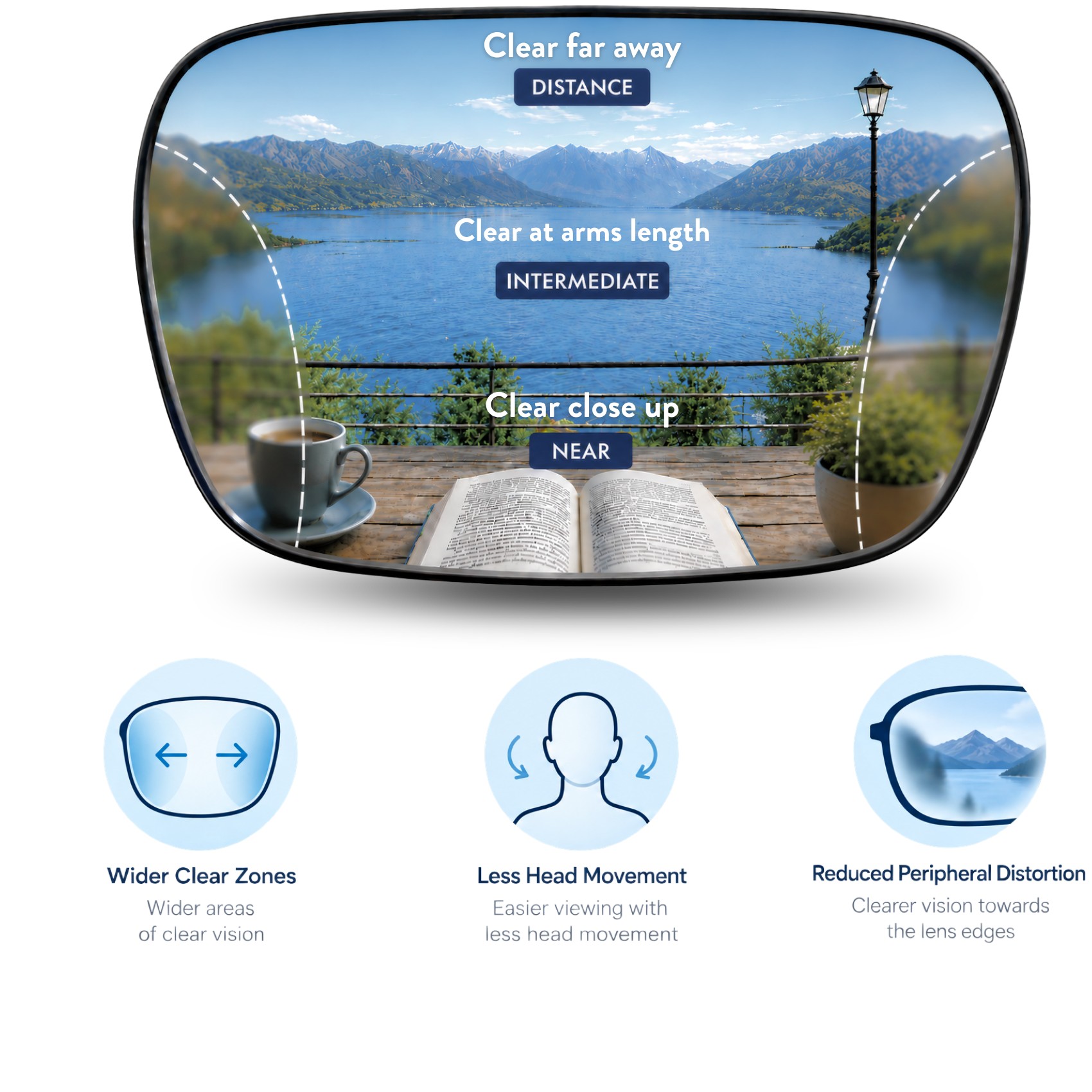
Benefits of Premium Progressives
More advanced progressive designs can provide a wider, more natural field of clear vision, making it easier to move between different distances throughout the day.




Tips for adapting to progressive lenses
A few simple habits can help you get comfortable with your new lenses.
01
Wear them regularly
Give your eyes and brain time to adjust to your new glasses.
02
Move your head
Turn your head slightly when looking to the side.
03
Use the right area
Look through the upper, middle and lower areas for different distances.
04
Give it time
Most people adjust quickly, but it can take a few weeks to feel natural.
05
We're here to help
If something doesn't feel right, we're happy to check your glasses.

What if I spend most of
my day at a computer?
If your vision needs are primarily focused on computers, paperwork and other mid-range tasks, an occupational lens may be a better option than a traditional progressive.
Occupational lenses are designed around the distances you use most during your working day.
Find the right progressive lenses for you
The right progressive lens depends on your prescription, lifestyle and how you use your vision. We’ll help you compare the options and find a lens that gives you the right balance of comfort, performance and value.
Questions about progressive lenses
Answers to some of the common questions we hear about progressive lenses and age-related changes in vision.
If your new glasses don't feel right after you've had time to adjust, come back and see us. We can check the fit and measurements and make sure your lenses are working as they should.
Yes, but it depends on your working distance and how you use your computer. If you spend much of your day at a computer, an occupational lens may provide a more suitable range of vision.
Yes. Progressive lenses are designed for everyday wear and provide vision across a range of distances in one pair of glasses.
Yes. Progressive lenses can be made as prescription sunglasses, giving you clear vision across different distances while protecting your eyes from bright sunlight.
Yes. Lens materials can be selected to reduce thickness and weight, particularly for stronger prescriptions. We'll recommend the most suitable option for your prescription and frame.
Presbyopia usually becomes noticeable from around the age of 40–45, although the timing varies from person to person. Progressive lenses may be one option once you need correction for more than one viewing distance.