Why Anti-Reflection Coating Is Worth It
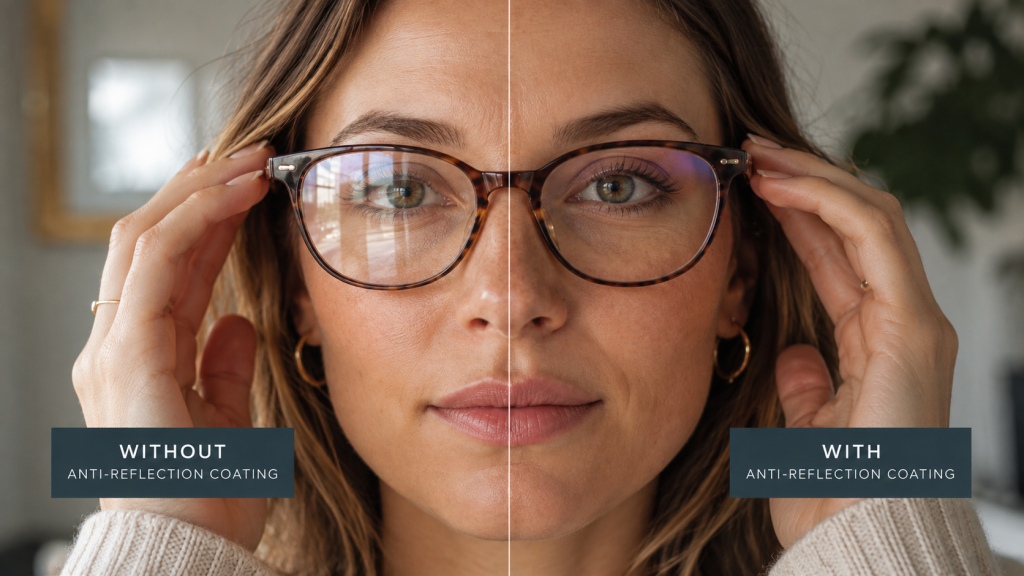
Have you ever wondered why your optometrist or dispensing optician recommends an anti-reflection coating when you choose new glasses? It’s much more than just an optional extra.
An anti-reflection (AR) coating can improve the quality of your vision, make your lenses easier to keep clean, and even make your glasses look better. A lens made from optical plastic without an anti-reflection coating lets around 92% of light pass through to your eyes, while about 8% is reflected away. These reflections can cause glare, reduce contrast, and make your vision feel less sharp.
An anti-reflection coating is made up of several ultra-thin, invisible layers that reduce these reflections. Instead of bouncing off the lens, the coating allows much more light to pass through to your eyes. Modern premium AR coatings allow up to 99% of light to reach your eyes, giving you sharper vision, with less glare and better contrast. They’re especially helpful when driving at night, using digital devices, or working under bright lighting.
Today’s premium coatings also make lenses easier to care for. An oleophobic layer resists fingerprints and skin oils, a hydrophobic layer repels water, and an anti-static layer helps prevent dust from sticking. Some coatings, such as Hoya Full Control, also contain silver ion technology to help inhibit the growth of bacteria on the lens surface.
If you’re choosing new glasses, ask the team at Wanganui Eyecare about the benefits of an anti-reflection coating. We’ll explain the different options available and help you choose the coating that’s best suited to your lifestyle and visual needs.

Written by Michelle Burnett
Dispensing Optician
From clearer vision to easier-to-clean lenses, the right coating can make your glasses more comfortable to wear every day.
Ask our team about the coating options available for your next pair of glasses.
